10 Ways to Use A.I. In My Business
This Month, we're focusing on the power of Artificial Intelligence and how it can integrate into your online presence. We discuss ten ways to Unlock the Power of AI in your Business. Businesses can use AI to improve processes, increase productivity, and support employees across various functions, including customer service, sales and marketing, finance, and general operations. Here are some ways you can leverage AI in your Business:
1. Automating Routine Cognitive Work
AI can automate repetitive tasks that were initially completed by humans, freeing up employees to focus on more complex and strategic work. For example, AI can automate data entry, generate reports, and perform basic analysis, allowing your employees to spend their time on more valuable activities.
2. AI-Enabled Innovations, Products, and Services
AI can create innovative products and services that provide unique value to your customers. For example, companies like Levity.ai offer AI-powered image recognition and analysis tools that can be used in various industries, such as retail, manufacturing, and healthcare. Another example of AI Integration is the new AI-powered tools for sellers on Amazon. The new tools allow sellers to create product backgrounds without needing a third-party service.
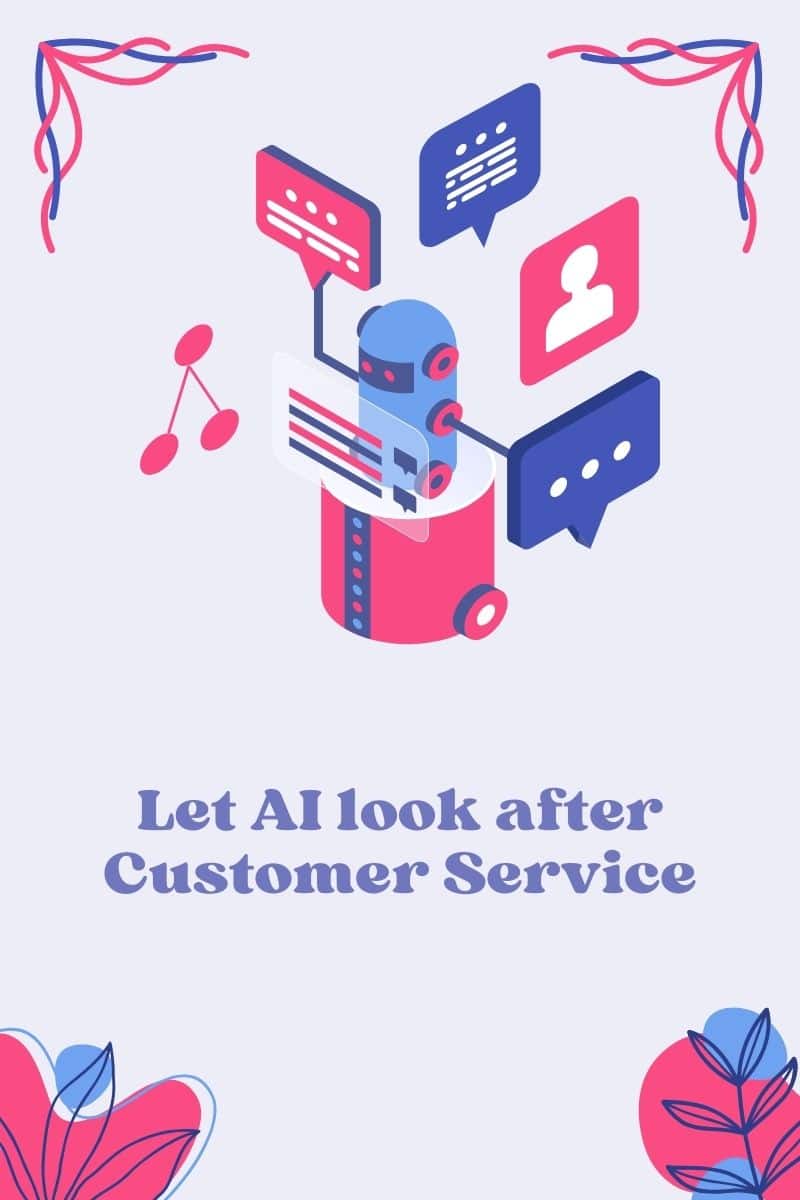
3. AI for Personalised Customer Services, Experiences, and Support
Delivering personalised customer services and experiences is one of the most prevalent enterprise use cases for AI. By using identifiers about customers and consolidating signals from multiple systems, AI can understand who your customers are, what describes them, and what motivates them to create a personalised experience.
A personalised customer A.I. we use is HeyLibby (the small blue bird icon in the bottom right corner of the page). It is an AI chatbot that answers basic customer questions but has a lot of versatility if you're willing to put the effort in. Ask a question and see how you like it! Other similar types of AI for customer support services can include email aggregation services that help produce newsletters, implementing AI in your company's FAQ page or even automating your booking services.
4. AI for Addressing Industry-Specific Needs
Although many AI applications span multiple industry sectors, some use cases are specific to individual industry needs. For example, the industrial sector uses AI for predictive machine maintenance to minimise downtime and optimise production. There are also systems to improve other facets of the production and manufacturing process. Amazon, Australia Post and Woolworths Group all use a form of AI to streamline their warehousing and production facilities.
5. AI for Data Security, Process Automation, and Customer Care
AI is rapidly transforming the way businesses operate. According to a survey by Forbes Advisor, data security, process automation, and customer care are the top areas where companies have applied AI in data security. AI can help businesses to identify and mitigate threats more quickly and effectively. For example, AI-powered security solutions can detect and block malware, identify and prevent data breaches, and monitor user behaviour for abnormal activity.
AI can also automate various business processes, such as customer onboarding, order processing, and financial reporting. This can lead to significant efficiency gains and cost savings.
In customer care, AI can provide customers with personalised support, answer their questions, and resolve their issues quickly and efficiently. AI-powered chatbots are becoming increasingly popular in this area, as they can provide 24/7 support and handle a large volume of inquiries simultaneously.
Here are some specific examples of how AI is being used in each of these areas:
- Data security:
- A cybersecurity company called Darktrace uses its in-house AI to detect and respond to cyberattacks in real time.
- SentinelOne uses its AI to protect endpoints from malware and other threats.
- A company called Lacework uses their AI to secure cloud workloads.
- Process automation:
- UiPath uses AI to automate repetitive tasks and workflows.
- Automation Anywhere uses its AI to automate business processes across various industries.
- Blue Prism uses AI to automate customer-facing and back-office processes.
- Customer care:
- LivePerson uses AI to power its chatbots, which provide customer support for various businesses.
- Zendesk uses AI to help companies resolve customer tickets more quickly and efficiently.
- Genesys uses AI to personalise customer interactions and improve the overall customer experience.
These are just a few examples of how AI is used to improve businesses in various ways. As AI develops, we will likely see even more innovative and groundbreaking applications for this technology as time progresses.

6. AI for Predictive Analytics and Decision Making
AI can analyse large amounts of data and identify patterns and trends that humans may be unable to detect. This can help businesses make more informed decisions and predictions about future outcomes. For example, AI can predict customer behaviour, optimise supply chain management, and identify potential risks and opportunities.
7. AI for Talent Acquisition and HR
AI can streamline the recruitment process by automating tasks such as resume screening and candidate matching. This can help businesses find the right talent more quickly and efficiently. AI can improve employee engagement and performance by providing personalised training and development opportunities. One of my favourite training AI is Guidde. It can be used to create training material and guides that can be given to staff to streamline training.
8. AI for Content Creation and Curation
AI can create and curate content, such as blog posts, social media updates, and product descriptions. This can help businesses save time and resources while maintaining a consistent and engaging online presence. We discuss the importance of consistent content creation and ways to implement these steps in our web design and content creation best practices. AI can also personalise content for individual users, improving customer experience. Early use cases included websites like wish.com, which used autogenerated product descriptions. Amazon is implementing a more advanced adaptation of this system to help their sellers.
AI for content creation saves us a lot of time and resources. Tools such as creasquare can handle content scheduling and even have an inbuilt content creator. Tools such as Canva have AI that can generate images for backgrounds. Pexels is also a good resource for finding ideas to put with your content.
9. AI for Cybersecurity and Fraud Detection
AI can help businesses protect their sensitive data and maintain the trust of their customers by identifying and responding to cybersecurity threats and fraudulent activities in real-time. AI-powered security solutions can analyse large amounts of data and detect anomalies that may indicate a potential attack. For example, AI can be used to identify patterns of suspicious behaviour, such as unusual login attempts or large withdrawals from bank accounts.
Many banks use AI-powered fraud detection systems to protect their customers from financial fraud. These systems can monitor customer transactions for suspicious patterns, such as multiple failed login attempts or unusual purchases. If a potential fraud is detected, the system can alert the bank and the customer, allowing the bank to take steps to mitigate the damage.
AI is also being used by some streaming services to detect if their licenses are being honoured. While the use of AI to detect license infringement is somewhat controversial, it is essential to note that streaming services have a right to protect their intellectual property. AI can be a valuable tool for streaming services in this regard, as it can help them reduce piracy and ensure the content creator is compensated for their work.
10. AI for Supply Chain Optimisation
Artificial intelligence (AI) can be used to optimise supply chain operations in many ways, including:
- Predicting demand: AI can analyse historical sales data, customer trends, and other factors to predict future demand for products and services. This information can be used to make informed decisions about production, inventory, and transportation.
- Identifying bottlenecks: AI can identify bottlenecks in the supply chain, such as slow-moving inventory, inefficient transportation routes, and capacity constraints. Once bottlenecks are identified, businesses can take steps to address them, such as increasing production capacity, streamlining transportation routes, or outsourcing specific tasks.
- Optimising inventory levels: AI can optimise stock levels by balancing the need to have enough products on hand to meet demand with the cost of carrying too much inventory. AI can also forecast demand for individual products and services, which can help businesses avoid running out of stock or overstocking.

There are several benefits to using AI to optimise supply chain operations, including:
- Reduced costs: AI can help businesses reduce costs by optimising inventory levels, streamlining transportation routes, and automating tasks.
- Improved customer satisfaction: AI can help businesses improve customer satisfaction by improving inventory levels, improving delivery times, and providing more accurate order tracking information.
- Increased efficiency: AI can help businesses to increase efficiency by automating tasks, streamlining processes, and improving decision-making.
Several businesses are already using AI to optimise their supply chain operations. Here are a few examples:
- Walmart: Walmart uses AI to predict product demand and optimise its inventory levels. This has helped the company to reduce inventory loss and improve customer satisfaction.
- Amazon: Amazon uses AI to automate various tasks in its supply chain, such as order picking and packing. This has helped the company to improve efficiency and reduce costs.
- Maersk: Maersk, a shipping company, uses AI to optimise its shipping routes and reduce fuel consumption. This has helped the company to reduce costs and improve its environmental impact.
AI is a powerful tool that can optimise supply chain operations and improve business performance. By using AI to predict demand, identify bottlenecks, and optimise inventory levels, businesses can reduce costs, improve customer satisfaction, and increase efficiency.
The use of AI in supply chain optimisation is still in its early stages, but it has the potential to revolutionise how businesses operate. As AI technology develops, we expect to see even more innovative and groundbreaking applications for AI in supply chain management.
Incorporating artificial intelligence into your business strategy enables you to maintain a competitive edge and foster innovation within your industry.
However, successful AI implementation demands a well-defined, comprehensive look at your business objectives and the specific challenges you aim to address. AI is not a one-size-fits-all solution; it requires meticulous planning and seamless integration to achieve its full potential. Harnessing AI empowers you to make faster, more accurate decisions, elevate customer experiences, and secure a distinctive advantage in your field. It's crucial to emphasise that AI complements human roles, serving as a tool that necessitates human oversight for setup and task prompting rather than replacing human jobs.
We hope you found this article insightful and that you can start making your first professional business website! Be sure to follow us across all our Socials and sign up for our newsletter to receive occasional emails with events, offers and new blogs!
Disclaimer: If you choose to purchase or sign up for any programs or software talked about in this article, a small compensation may be paid out to DPT Total Solutions. This does not come at any extra cost to you. We use these affiliate payments to ensure we can provide you with the best advice and practices to Build, Grow, Optimise and Integrate your business online.